
Zirocco ROAD Dryers

Jet-powered road dryer for asphalt and concrete

Wet surfaces are one of the most common causes of delays in road marking and joint sealing work. A road dryer solves the problem by removing moisture faster than the weather can cause problems.

Our jet-powered road dryers, also known as jet dryers, dry asphalt and concrete up to 10 times faster than traditional gas burners—and without the open flame and fire hazards that come with them.

A jet dryer that dries some asphalt

Advantages that pave the way - smarter, faster and stronger solutions for all seasons

quality

You can increase the quality of the work and achieve longer and greater durability. The heat and powerful airflow dries and cleans deeper into joints, cracks and pores in the surface, heating the surface for better adhesion.

Extended season

Road marking and sealant application is challenged in climates with wet and humid and cold conditions. Our machines can dry efficiently all year round and are even able to raise the surface temperature up to 30 degrees Celsius.

How to plan

Get the ability to continue working even in bad weather. Meet deadlines and ensure your work can be completed within the planned deadlines.

Telematics and support

Get data and statistics on performance and GPS tracking. Reports can be generated for external and internal purposes. Zirocco continuously updates firmware and provides support and can use the system to perform diagnostics to solve any machine errors.

SPEED

Up to 5 km/h depending on the product selected, the surface and weather conditions.

Resources

Use your resources more efficiently. Traditional drying with gas, for example, requires 2-3 employees. Our drying machines require only 1.

What does a road dryer do to the surface?

A road dryer removes moisture from the entire depth of the surface layer while simultaneously raising the temperature of the subgrade by up to 30°C. This is crucial because moisture trapped in pores and cracks weakens adhesion and shortens the durability of newly applied markings.

Our jet dryers force 500–620°C non-flammable hot air into the substrate at speeds of up to 5 km/h. This applies to both concrete and asphalt, where the porosity of the material makes thorough drying particularly important before paving or sealing.

Which road dryer is right for your operation?

The right model depends on the scope and nature of the work. We offer three models, each with its own area of expertise in road construction.
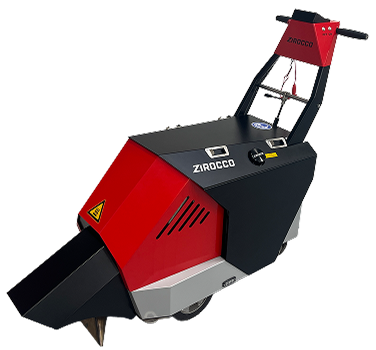
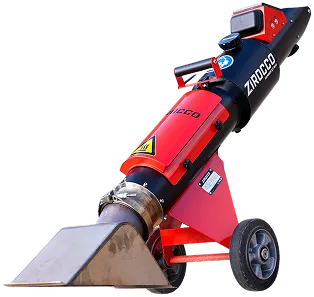
F200
The world's most powerful jet dryer
  • Drying speed up to 5 km/h
  • Road marking on runways and parking lots
  • Crack repair and joint sealing
  • Membranes
HAMMER JET MAX
THE ADVANCED VERSION OF THE HAMMER JET SERIES
  • Application and removal of tape
  • Bridge deck waterproofing
  • Sealing of cracks and joints
  • Road markings
  • Roofing
HAMMER JET
The world's most compact and versatile dryer
  • Application and removal of tape
  • Bridge deck waterproofing
  • Sealing of cracks and joints
  • Road markings
  • Roofing

Can a road dryer operate in cold and damp weather?

Our machines operate at temperatures as low as -10°C and raise the temperature of the substrate rather than just the surface temperature. This ensures that the heat penetrates deeper into pores and cracks, even as humidity rises and the temperature drops.  

For contractors in Northern Europe, year-round road marking has become standard practice with our machines. This makes it possible to plan projects regardless of the weather and meet deadlines year-round

Find the right road drier for your operation

Our team has worked with road marking contractors and operations managers in 19 countries. If you’re unsure which model is right for your surfaces, the scope of your project, or your working conditions, we’ll help you find the right machine before you make your decision.

In this video, the owner of Complete Sealing Solutions talks about his positive experience with desiccation and how it has improved the efficiency and performance of their business.

FAQ

How quickly does a road dryer dry wet asphalt?

Our road dryers dry wet asphalt at speeds ranging from 2.5 km/h on the Hammer Jet to 5 km/h on the F200, depending on surface conditions and temperature. Under comparable conditions, this is up to 10 times faster than gas burners. The F200 is particularly well-suited for long stretches of highway and large parking lots, where high drying speeds make a measurable difference to the project schedule.

How much maintenance does a road dryer require?

The turbine modules are serviced every 100 hours, typically once a year. The built-in Telematics system monitors the machine’s condition in real time and alerts you to any issues before they affect operations on site. Our distributor network provides service in 19 countries across Europe, the Americas, and Asia—and 60% of support requests are resolved without a service visit.

What kind of fuel do road dryers use?

Our machines run on standard diesel (EN590) or kerosene with 3–5% Zirocco Turbine Oil. Both types of fuel are readily available at regular gas stations and are easier to handle on the job site than the LPG cylinders required by gas burners.

How many operators does a road dryer require?

A road dryer requires a single operator. The machine moves forward at a constant speed and dries the surface without stopping, whereas gas burners typically require 2–3 people to be operated safely. On an annual basis, this makes a significant difference in labor costs.